Shadow girls, p.1
Shadow Girls, page 1



Shadow
Girls
Also by Carol Birch
Life in the Palace
The Fog Line
The Unmaking
Songs of the West
Little Sister
Come Back, Paddy Riley
Turn Again Home
In a Certain Light
The Naming of Eliza Quinn
Scapegallows
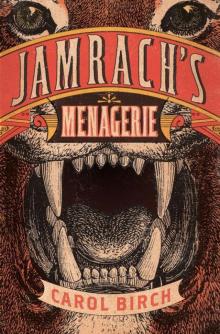
Jamrach’s Menagerie
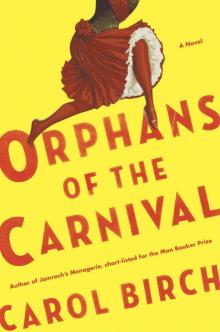
Orphans of the Carnival
Cold Boy’s Wood
Shadow
Girls
Carol Birch
www.headofzeus.com
First published in the UK in 2022 by Head of Zeus Ltd,
part of Bloomsbury Publishing Plc
Copyright © Carol Birch, 2022
The moral right of Carol Birch to be identified as the author of this work has been asserted in accordance with the Copyright, Designs and Patents Act of 1988.
All rights reserved. No part of this publication may be reproduced, stored in a retrieval system, or transmitted in any form or by any means, electronic, mechanical, photocopying, recording, or otherwise, without the prior permission of both the copyright owner and the above publisher of this book.
This is a work of fiction. All characters, organizations, and events portrayed in this novel are either products of the author’s imagination or are used fictitiously.
A catalogue record for this book is available from the British Library.
ISBN (HB): 9781838939458
ISBN (XTPB): 9781838939465
ISBN (E): 9781838939441
Head of Zeus Ltd
5–8 Hardwick Street
London EC1R 4RG
WWW.HEADOFZEUS.COM
For Jan
Contents
Also by Carol Birch
Title Page
Copyright
Dedication
Part One: Penumbra
Part Two: Umbra
Part Three: Antumbra
After
About the Author
An Invitation from the Publisher
Part One
Penumbra
WE WERE THREE ROWS OF GIRLS in grey pleated skirts and green V-necked jumpers bearing the gold crest and the school motto: Veritas et Constantia. Music, Friday morning. I was in the middle row with Pamela. Her deep voice hovered above the girly highness, in tune but out of sync with all the rest – not that she cared, she’d belt it out even if she sounded like a crow. I only mouthed the words because I couldn’t hold a tune to save my life. My voice was hopeless.
In front of us, front row centre, Sylvia Rose, star singer. Nothing nice about her but the name.
Mr Phelps stopped playing, held up his hands, swivelled round on his stool to face us. ‘Some of you are going down when you should be going up,’ he said.
‘Sounds painful,’ said Dotty Spawl and a titter ran through us, but he wasn’t in the mood – poor thing with his high white face. ‘Now, come on, look,’ he said sadly, ‘I know it’s Friday and everyone’s tired but at least try and make the effort. You know this,’ and turned back to the old Broadwood, preparing to play, hair flopping in brown strings over his brow. He was young and thin and male, a rare thing in our school. ‘Now let’s go,’ he said.
We’d sung it a hundred times. That tired old piano. Dum diddle um da dum dum, dum diddle um da – supposed to sound like the waves of the sea.
And we’re off!
O-o-o-o-o-o-or the ocean flies a merry fae—
Thirty-six voices. And though I was behind her, all I could hear was that way that Sylvia sang that set my teeth on edge, unnatural, like dressage with horses. The way her mouth put itself through those smug distorted articulations. The way her throat clicked on the hard g at the end of rolling in rolling sea. She knew we were laughing at her.
as she passes all the blue waves say—
Well, she asks for it.
Marianina, do not roam
Whither, whither is thy home
Come and turn us into foam
And the music went tripping along.
At the end of the lesson I got a dirty look from Mr Phelps. Everyone was mucking about, not just me, but it was me he looked at. Mr Phelps was OK. Pamela’s voice was in full mimic mode. Co-o-me, oh co-o-me, she sang pompously, and turn us into foam, mouth all over the place, conducting with her arms. Sylvia was up ahead of us pretending to take no notice.
‘Ssh,’ I said, ‘stop it, stop it,’ hoping Mr Phelps would hear.
Pamela laughed and stopped, and we walked along the corridor with our books clutched tight against our chests, mine completely flat, hers enormous. The knot of her tie was always too small and looked as if it was strangling her.
It was lunchtime.
We didn’t have school dinners. We were supposed to take our packed lunches into the dining hall and eat in the packed lunch section, but we always took our sandwiches up to the greenhouse on the roof. The corridors teemed. Staff swept the floors with their black gowns and every height and corner of the place was stuffed with the smell of meat pie, hot pastry, gravy. The building was old, with lofty ceilings and high windows, wide corridors and walls of shiny brown tiles, five stacked layers of them with a staircase at either end going from top to bottom, and at each mid-landing the light streaming in through arched windows frosted at the bottom so you couldn’t look out. You reached the greenhouse up a narrow wooden stair from the top floor where the science labs were, out of bounds unless you had special permission, but no one ever went there at lunchtime. All you had to do was get past Tasker and Tufton, Chemistry and Physics, standing apart from the herd like scary old bulls on the top floor. We were good at sneaking.
We loved the greenhouse. So quiet after all the downstairs jumble, so nice to eat your sandwiches looking up at the sky. The roof was a fantasia of turrets and chimneys, with skylights and sheds, all kinds of strange things. From where we sat on our bench we could look straight out at the big central turret, a flat-topped grey slate pyramid crowned with iron spikes. Our school was a long building of red brick and yellow sandstone right in the middle of the city. The streets all around teemed with traffic but it was far away. It wasn’t much of a greenhouse, just a small, earthy-smelling, wooden-floored space with shelves on either side and a couple of benches to sit on and a small stepladder to the door leading onto the roof, which sometimes was locked but more often was not. I don’t think I ever heard anyone say the roof itself was out of bounds, but I suppose it must have been. Anyhow, you could push hard against the stiffness of the old door and get out. The sky made you dizzy up there. Once we actually ate our sandwiches sitting right next to the wall that overlooked the playground, and once next to the plinth under the big turret.
It was too cold to go out today. Inside was musty and warm. Pamela lit a cigarette and opened a window slightly to blow the smoke through. She smoked the way my mum and dad did, second nature. I didn’t smoke, it made me feel sick.
‘I don’t mind her being posh,’ Pamela said, ‘it’s the way she looks down her nose.’
‘I know.’ First time I saw Sylvia, eleven years old, all of us new, standing next to my desk doing nothing in particular, just looking down into it – she comes by, says in that snotty voice, ‘What are you looking at?’ Her face frowning at me, not meeting my eyes. All sharp bones, even her face with its witchy chin and pointy nose and long upper lip, snooty eyebrows arching up into her forehead.
‘What do you mean?’ I said. ‘I’m not looking at anything.’
‘Why are you looking in my desk?’
‘It’s my desk.’
Sylvia realised she’d made a mistake and blushed. ‘Sorry,’ she said and off she marched as if she was in the right anyway. That’s how she was.
‘Good voice though,’ I said.
‘Oh aye, she’s got a good voice. Got to give the girl something.’
‘She can go really high and low.’
Pamela gave a pig snort.
The few plants were a bit straggly. This was not hyacinth season, when all the little first-formers brought their bulbs out of the darkness and the whole place was full of the gorgeous scent. This was getting on for the tail end of the year. Two months to Christmas and Mocks coming up. Horrors. The light was subdued by the shadow of the turret. Hardly afternoon and the sky was darkening.
‘That big black cloud,’ I said.
‘Gonna pour.’
This was where we came to tell scary stories. I still hated going upstairs to the toilet in the old house where my grandparents lived, so why on earth I loved scary stories I don’t know. Pamela was full of them. That one, that one time, the one where I nearly fell down the stairs, I never had a tingle down the back of my neck and to my heels as I had that time descending the wooden steps after—
‘James?’
‘Yes, Madame?’
‘James?’
‘Yes, Madame? Madame, may I ask one thing?’
‘Yes, James?’
‘Madame—?’
‘Yes, James?’
‘Madame—?’
‘Yes, James?’
‘Madame—’
AAAAAAAAAAAAAAARGHHH
—for God’s sake, the way she screamed! Curdled the blood in your spine.
‘Whose daft idea was it to choose Caesar and Cleopatra for the play?’ said Pamela, inhaling.
‘Frith.’
‘Stupid. There’s only two female roles.’ She blew the last smoky mouthful out of the window and ground the dog-end viciously into the wood at the back o f the bench.
‘Hope it’s better than She Stoops to Conquer.’
‘Ach!’ she gagged.
The bell rang.
English with Miss Swett, Macbeth, then triple Games. We were bunking off from that, me because I was rubbish at anything and everything to do with sports apart from dodging the ball, she because though she could’ve demolished a hockey team with one charge she hated stripping off and running round a stupid field in the freezing cold and it took her ages getting home from the Games field and she didn’t see the point. Anyway, we liked going round town. We’d been bunking off for so long now that it would be noticed if we suddenly turned up. Best not to rock the boat. In our classroom Dotty was sticking out her huge breasts as she put her hair up, Shanna was plaiting Linda’s hair, Gail Turnbull was talking about how spotty her boyfriend’s back was. The light was harsh and pressing. Shanna poked me between the shoulder blades. ‘You bunking off?’ she said.
‘Of course.’
‘One of these days.’ She smashed the spine of her exercise book down along its length with the side of her fist. I was jealous of Shanna’s hair, a natural riot of thick black curls.
‘Live dangerously,’ said Pamela.
‘Yup,’ said Sheila Simpson, ‘till the excrement hits the proverbial.’
Miss Swett came in the open door and walked to the teacher’s desk on stumpy black heels, dropped her books and files on it and let them fall sideways. ‘Afternoon, girls,’ she said. Miss Swett was young and trim with short dark hair.
‘Afternoon, Miss Swett.’ We’d got used to her name by now.
‘Tell me, someone,’ she said, half-turned to the blackboard, chalk in hand, ‘where did we leave off last time?’
‘Sheesh!’ said Dotty Spawl. She was always saying that. She said, ‘Sheesh!’ and Sheila said, ‘Heavens to Murgatroyd!’ about fifty times a day, and I can tell you, it was trying.
‘Anyone?’
‘The murderers killed Lady Macduff and the little boy,’ said Sheila.
‘They did indeed, Sheila. But we went further than that, didn’t we?’
Linda put her hand up. ‘Macduff wants revenge. They were in England getting up an army.’
‘That’s right. A bit more, please.’
‘It was Malcolm and Macduff. Macduff took it very hard.’
‘Well, you would, wouldn’t you,’ said Sheila and a laugh went round.
‘I don’t think he took it that badly really.’ Gail from the back row. ‘That was me, I’d’ve been screaming blue murder.’
‘Well, what do you think about that?’ Miss Swett was writing on the board: Act V, Scene 1. ‘Would it have been more effective, do you think, if we’d seen Macduff break down and shout and scream or fall on the floor?’
‘No,’ I said.
‘Can you tell us why, Sally?’
‘Well, people don’t necessarily behave like that, do they? I mean, it’s like if you’re in shock. You might look normal, you might not say anything, but all it means is that you just can’t take it in. I thought it was really sad, when he said, “What, all my pretty ones?” very quietly, and then he said it again a bit later as if he couldn’t believe it. I think he did.’
‘That’s right.’ Miss Swett sat down and dragged a book from the collapsed pile. ‘And that’s why Shakespeare’s such a powerful playwright. He sees the complexity in the way people behave.’
Pamela poked me in the side. ‘You’re right, you know,’ she said.
‘Act V, Scene 1,’ said Miss Swett.
We opened our books. Pamela slightly raised the lid of her desk and slipped one hand in the gap to scrabble about inside.
‘We’ll carry on with the read-through. Now this is a small scene but it’s a very important one.’
‘Out, damned spot!’ said Sheila, splaying her hand.
‘Thank you, Sheila. I’m sure you’ve all remembered this bit.’ We’d had the whole thing on the radio over three lessons. Next was Lady Macbeth. Miss Swett looked around at us all. ‘Sheila,’ she said, ‘will you be Lady Macbeth?’
Sheila pulled a face.
‘OK. Doctor? Any volunteers?’
‘I’ll do it.’
‘Good, thank you, Susan. Gentlewoman? Gentlewoman? Pamela, put your desk lid down.’
Pamela looked up, surprised. The underside of her desk lid was papered with cut-offs from Disc and Pop Weekly – Stones, Beatles, the Walker Brothers. She closed it but not before she’d sneaked out a crumpled package with the remains of her cold toast and laid it on her knee. No one wanted to be Gentlewoman.
‘Sally,’ Miss Swett said, ‘you’re the Gentlewoman.’
We were terrible actors, sitting there at our desks reading from the page. I don’t know who was worse. Me and Susan Grech speaking the words with minimal inflection, Susan stumbling over perturbation, me at one point trying to put in a bit of expression but hearing my voice sound stupid as it left my mouth just the way it did when I sang. So I gave up and just read the words. Enter Lady Macbeth. Sheila, bending her high sweaty forehead over the book. ‘Yet here’s a spot,’ she said as if she was cleaning the kitchen. And all the damned spot and murky hell and the smell of the blood and – Oh, oh, oh! – all that – the three of us just reading the words.
‘Can you put a bit more into it?’ Miss Swett asked without much hope.
I got the easiest part. Sheila sighed loudly behind me when she finished her bit. Susan had the final speech, plod plod plod, and I got the last line:
‘Good night, good doctor.’
We were awful. After I said, ‘Good night, good doctor’, Pamela gave me a gormless-face look and drawled, ‘Night-night!’, in an idiot nasal whisper, and it was so stupid it made me laugh and I couldn’t stop.
‘All right, all right,’ Miss Swett said, ‘yes yes yes yes yes, it’s all very funny, ha ha. Now settle down.’
The trouble with me was, when I got going, I couldn’t stop.
‘Now,’ Miss Swett said, ‘if you had to put it in one word, what is that scene about?’
Pamela ripped off a piece of toast, leaving her finger marks in it, handed it sideways to me underneath the desk. ‘I think you deserve this,’ she said under her breath, ‘after that brilliant performance.’
‘Guilt,’ said Sylvia Rose.
‘Guilt indeed,’ said Miss Swett.
*
The basement was tiled and dim and stretched into shadows at either end. Mysterious doors on one side were never opened and always kept locked. On the other side a high partition of painted wood and frosted glass concealed the toilet block with its long row of face-to-face sinks all down the middle of the room. At either end of the corridor there was a cloakroom, each one dark and spooky, but ours was the worst. We used to be in the other one down at the far end – it was bigger and more impersonal and much more crowded – but now we were higher up the school we had the little cloakroom in the dark end, and it was creepy as hell. We had our own toilets but not enough sinks for us all and you could smell the toilets. I once saw a pair of pale bare feet walking rapidly along the whole length of the toilet row, below the line of the partition, but no one came out at the other end. Instead of going to look, I clamped my teeth together, goggled at the dark air and flew from that place with the devils of hell nipping the nape of my neck.
We hung about in the cloakroom trying to look as if we were getting ready for the Games field like everyone else. Pamela spent ages washing her hands at one of the basins, the back of her yellow blouse pulled out of her waistband and bunching up at the back. Me, deeply absorbed in packing my school bag just so, cutting out all eye contact with the others, silly strident voices spouting nonsense – Sheila: Rose! Rose! Lend me your nose! – Dotty, back to her: Rose! Rose! Give me your toes! Then a double cascading cackle. Just anything stupid that came into their heads and out of their mouths. The sound of Sylvia blowing her nose. She cleared her nose about fifty times a day and carried a fancy initialled handkerchief in the breast pocket of her blouse for the purpose. She was always sniffy. I thought it was funny for someone with such a good voice to be always sniffy, but having no voice myself, who was I to say? From the corner of our eyes we watched them go, tired stoic girls trooping with gym pumps sticking out of drawstring bags slung on their shoulders. Not for a million pounds would I have gone with them. The buses, the blabber blabber, the horrible knowledge that you were crap at what was coming next. Never. Bloody Sylvia, of course, taking forever, looking back once and seeing us there, giving us one of her weird scowls, a face you could punch, looking down on us, immaculate hat straight and smart on her plain brown hair, feet in sensible shoes with newly polished round brown toes, bag with embossed initials in gold – S.F.R. – a bag that did not hang from one shoulder but sat straight across her back with its straps symmetrical.