Emperor

Emperor

Colin Thubron

Colin Thubron

The Emperor Constantine crosses the Alps at the head of a great army from the Rhineland in AD 312, and marches south to take Rome from the tyrant Maxentius. As he lays siege to the city of Verona, Constantine waits for the arrival of his wife, Fausta - his enemy's sister - whose cool detachment torments him. Emperor is a superbly imaginative reconstruction of the dramatic weeks leading up to Constantine's triumph in Rome. Written in the form of extracts from his own journal and letters from his empress, her frivolous female companion, his cynical secretary and a Christian bishop who is travelling with the army, the novel records a train of events which will change the world. Constantine is plagued by spiritual doubts, tortured by his wife's coldness, but he defies the omens to win a great victory at Verona and to lead his army south. On the road to Rome, the conqueror becomes the conquered as a blinding vision strikes him from his horse in an astonishing conversion to Christianity. Emperor summons up the Roman world of two thousand years ago, the everyday life of soldiers on campaign and the intrigues at court. But it is also the many-faceted story of a man's loss of faith in God and in human love, told with uncanny brilliance.
Read online
  • 633
Turning Back the Sun

Turning Back the Sun

Colin Thubron

Colin Thubron

Far away from the city of his birth, in a frontier town on the edge of tribal wilderness, a doctor tries to resolve the seemingly unreconcilable demands of his public career and his personal feelings. He believes his exile her to be temporary, and youthful memories of the distant city torment him with an unbearable sense of loss. Yet he has grown to love a fellow exile, a woman of fierce independence and strong will, who belongs by nature to the warmth and chaos of the frontier. But, during a summer of drought and disease, the desert erupts into savagery and he is at last confronted by the choice of returning to the city or of remaining with her.From Publishers WeeklyThubron is a British travel writer ( Where Nights Are Longest ) and novelist ( A Cruel Madness ) whose sense of atmosphere and character may remind the reader of Graham Greene, without seeming at all derivative. This novel has a rather portentous allegorical framework: in an unnamed country, presumably somewhere in Africa, hero Rayner (no first name) is a doctor struggling with a mysterious disease in a provincial town set in a wilderness inhabited by primitive bush people. He dreams nostalgically of the langorous, more cultivated coastal capital city where he grew up. After murders of townspeople by the savages, racial hatred begins to fester. Rayner, fascinated by the savages, becomes increasingly involved in their lives of apparent exile from an imagined paradise, and when he has a longed-for opportunity to return to the capital from which he was once exiled, he refuses to take it. Though the framework is heavy, Thubron's writing has remarkable vigor and fluency; and in Rayner's relationships--with the dancer Zoe, and with Ivar, a childhood friend who is now a rather sinister army officer--he shows sharp psychological insight and creates considerable pathos. In the end the book becomes a moving lament for a vanished world and for the difficulties of human communication. It's by no means a casual read, but an ultimately rewarding one. Copyright 1992 Reed Business Information, Inc. From Library JournalThe aborigines believe that if they can turn back the sun, prevent it from "dying" each night, then the tree that once connected heaven and earth will flourish anew and "everything will be all right." Rayner is a doctor temporarily assigned to an army unit sent to pacify these "savages," a few of whom have been raiding the outlying farms of this unspecified frontier town at a time of severe drought. As he watches them perform the "djannu" ritual, it seems for an instant that the sun does freeze on the horizon before inexorably resuming its journey. Nominated for the 1991 Booker Prize, this cryptic novel by a well-known British travel writer/novelist is a rumination on both our vulnerability to the vicissitudes of life and the resilience of the human spirit. In the face of the violence (not necessarily aboriginal) brought on by feelings of helplessness and fear of the unknown, Rayner discovers the power of love and of belief. Intelligent and lyrical in its evocation of life on the fringe of civilization, this book should attract a relatively small but discriminating audience. For larger collections of serious fiction.- David W. Henderson, Eckerd Coll. Lib., St. Petersburg, Fla.Copyright 1992 Reed Business Information, Inc.
Read online
  • 55
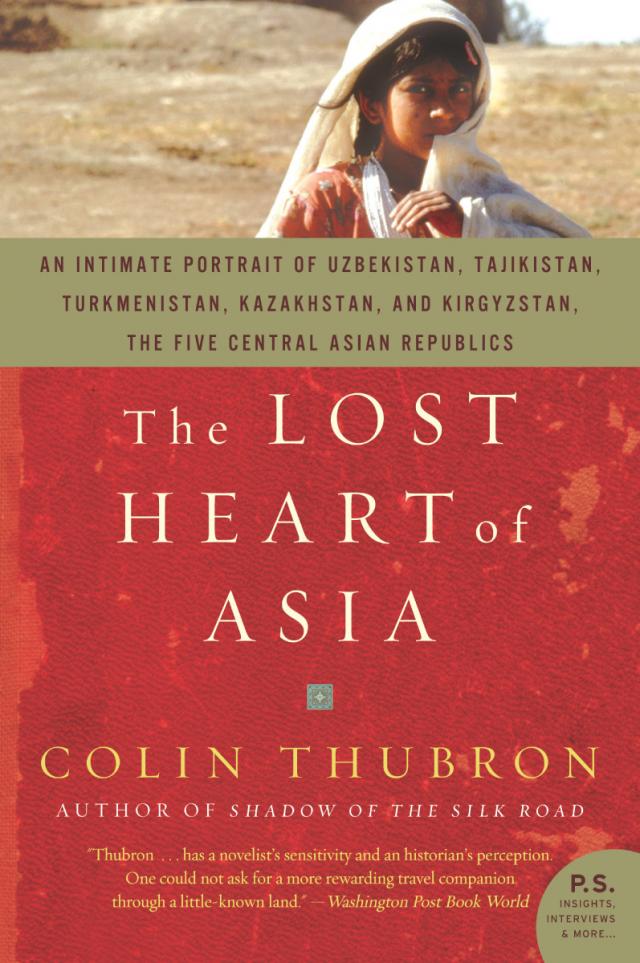
The Lost Heart of Asia

The Lost Heart of Asia

Colin Thubron

Colin Thubron

A land of enormous proportions, countless secrets, and incredible history, Central Asia was the heart of the great Mongol empire of Tamerlane and scene of Stalin's cruelest deportations. A remote and fascinating region in a constant state of transition—never more so than since the collapse of the Soviet Union—it encompasses terrain as diverse as the Kazakh steppes, the Karakum desert, and the Pamir mountains. In The Lost Heart of Asia, acclaimed, bestselling travel writer Colin Thubron carries readers on an extraordinary journey through this little understood, rarely visited, yet increasingly important corner of the world.
Read online
  • 31
In Siberia

In Siberia

Colin Thubron

Colin Thubron

As mysterious as its beautiful, as forbidding as it is populated with warm-hearted people, Syberia is a land few Westerners know, and even fewer will ever visit. Traveling alone, by train, boat, car, and on foot, Colin Thubron traversed this vast territory, talking to everyone he encountered about the state of the beauty, whose natural resources have been savagely exploited for decades; a terrain tainted by nuclear waste but filled with citizens who both welcomed him and fed him—despite their own tragic poverty. From Mongoloia to the Artic Circle, from Rasputin's village in the west through tundra, taiga, mountains, lakes, rivers, and finally to a derelict Jewish community in the country's far eastern reaches, Colin Thubron penetrates a little-understood part of the world in a way that no writer ever has.
Read online
  • 11
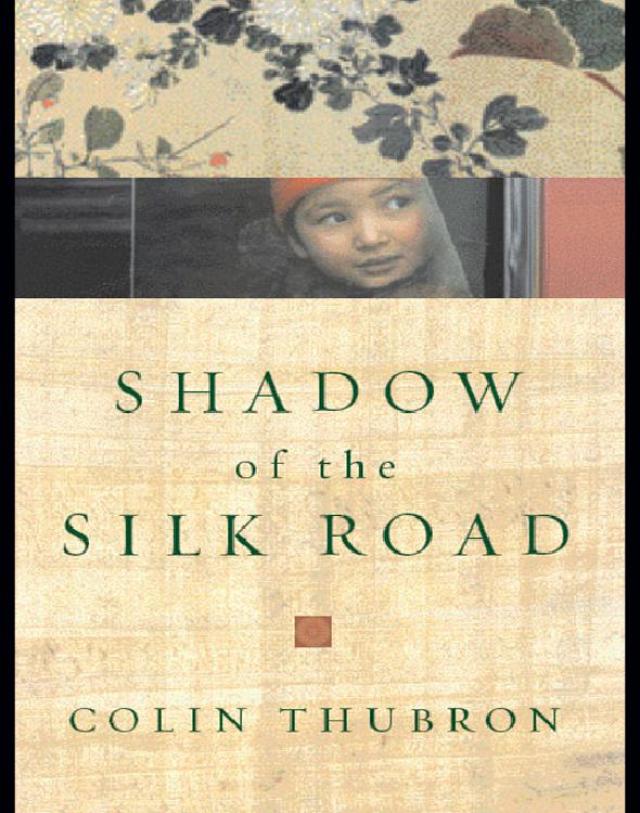
Shadow of the Silk Road

Shadow of the Silk Road

Colin Thubron

Colin Thubron

Shadow of the Silk Road records a journey along the greatest land route on earth. Out of the heart of China into the mountains of Central Asia, across northern Afghanistan and the plains of Iran and into Kurdish Turkey, Colin Thubron covers some seven thousand miles in eight months. Making his way by local bus, truck, car, donkey cart and camel, he travels from the tomb of the Yellow Emperor, the mythic progenitor of the Chinese people, to the ancient port of Antioch—in perhaps the most difficult and ambitious journey he has undertaken in forty years of travel.The Silk Road is a huge network of arteries splitting and converging across the breadth of Asia. To travel it is to trace the passage not only of trade and armies but also of ideas, religions and inventions. But alongside this rich and astonishing past, Shadow of the Silk Road is also about Asia today: a continent of upheaval....
Read online
  • 7
183