
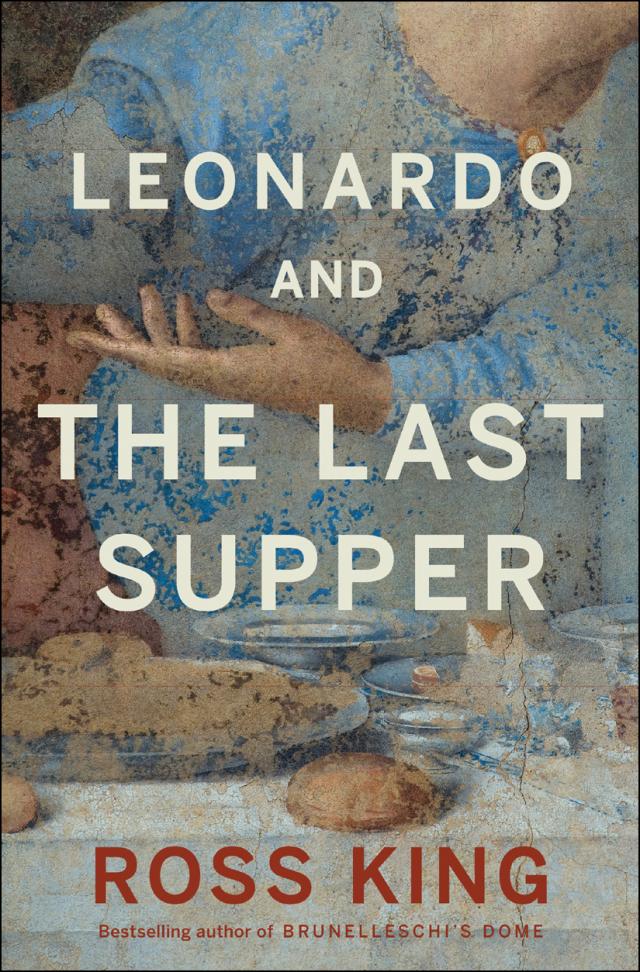
Leonardo and the Last Supper

Leonardo and the Last Supper

Ross King

Ross King

Early in 1495, Leonardo da Vinci began work in Milan on what would become one of history's most influential and beloved works of art—The Last Supper. After a dozen years at the court of Lodovico Sforza, the Duke of Milan, Leonardo was at a low point personally and professionally: at 43, in an era when he had almost reached the average life expectancy, he had failed, despite a number of prestigious commissions, to complete anything that truly fulfilled his astonishing promise. His latest failure was a giant bronze horse to honor Sforza's father: his 75 tons of bronze had been expropriated to be turned into cannon to help repel a French invasion of Italy. The commission to paint The Last Supper in the refectory of a Dominican convent was a small compensation, and his odds of completing it were not promising: Not only had he never worked on a painting of such a large size—15' high x 30' wide—but he had no experience in the extremely difficult medium of fresco. In...
Read online
  • 29
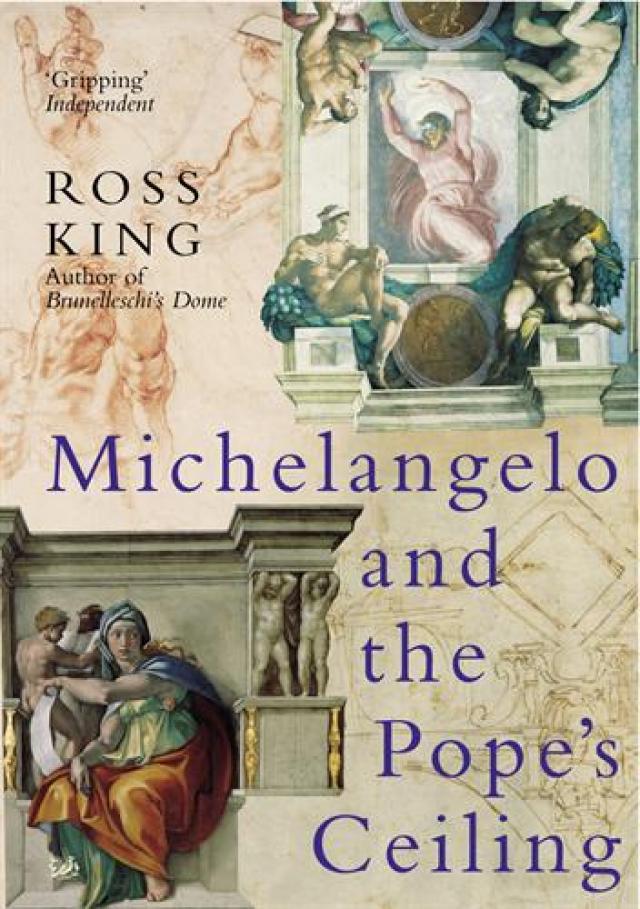
Michelangelo and the Pope's Ceiling

Michelangelo and the Pope's Ceiling

Ross King

Ross King

In 1508, despite strong advice to the contrary, the powerful Pope Julius II commissioned Michelangelo to paint the ceiling of the newly restored Sistine Chapel. With little experience as a painter (though famed for his sculpture David), Michelangelo was reluctant to begin the massive project. Michelangelo and the Pope's Ceiling recounts the four extraordinary years Michelangelo spent laboring over the vast ceiling while the power politics and personal rivalries that abounded in Rome swirled around him. Battling against ill health, financial difficulties, domestic problems, the pope's impatience, and a bitter rivalry with the brilliant young painter Raphael, Michelangelo created scenes so beautiful that they are considered one of the greatest masterpieces of all time. A panorama of illustrious figures converged around the creation of this great work-from the great Dutch scholar Desiderius Erasmus to the young Martin Luther-and Ross King skillfully weaves them through his compelling historical narrative, offering uncommon insight into the intersection of art and history.
Read online
  • 27
Ex Libris

Ex Libris

Ross King

Ross King

Isaac Inchbold, middle-aged proprietor of Nonsuch Books, has never traveled more than 24 leagues from London, where by 1660 he has made his home above his bookshop for 25 years. King (Domino) opens his finely wrought tale with Inchbold's receipt of a strange letter from an unknown woman, Alethea Greatorex, or Lady Marchamont. Surprising himself and his apprentice, Tom Monk, Inchbold consents to visit her at Pontifex Hall, in Dorsetshire. Once he arrives at the crumbling manor house, Lady Marchamont shows him its extraordinary library and sets him a strange task: he is to track down a certain ancient and heretical manuscript, The Labyrinth of the World, missing from her collection and identifiable by her father's ex libris. Withholding much relevant informationAsuch as the reasons that her husband and father were murderedAshe offers him a sum greater than his yearly income, but gives no reason other than that she wishes the collection undiminished. When he accepts the job, Inchbold is drawn into a clandestine, centuries-old battle over the manuscriptAhis every move, it seems, dictated by some unseen hand. King expertly leads his protagonist through an endless labyrinth of clues, discoveries and dangers, all the while expertly detailing 17th-century Europe's struggles over religion and knowledge. He interweaves a subplot describing the manuscript's journey from Prague to Pontifex Hall that involves theft, flight and murder. The world of the novel is satisfyingly complete, from its ornate syntax and vocabulary to the Dickensian names of its characters (Phineas Greenleaf, Dr. Pickvance, Nat Crumb); its beleaguered, likable narrator is fully developed; and its fast-paced action is intricately conceived. Fans of literary thrillers by the likes of Eco, Hoeg and Perez-Reverte will delight in this suspenseful, confident and intelligent novel.
Read online
  • 27
Defiant Spirits

Defiant Spirits

Ross King

Ross King

Beginning in 1912, Defiant Spirits traces the artistic development of Tom Thomson and the future members of the Group of Seven, Franklin Carmichael, Lawren Harris, A. Y. Jackson, Franz Johnston, Arthur Lismer, J. E. H. MacDonald, and Frederick Varley, over a dozen years in Canadian history. Working in an eclectic and sometimes controversial blend of modernist styles, they produced what an English critic celebrated in the 1920s as the “most vital group of paintings” of the 20th century. Inspired by Cézanne, Van Gogh and other modernist artists, they tried to interpret the Ontario landscape in light of the strategies of the international avant-garde. Based after 1914 in the purpose-built Studio Building for Canadian Art, the young artists embarked on what Lawren Harris called “an all-engrossing adventure”: travelling north into the anadian Shield and forging a style of painting appropriate to what they regarded as the unique features of Canada’s norther...
Read online
  • 15
183